.svg)
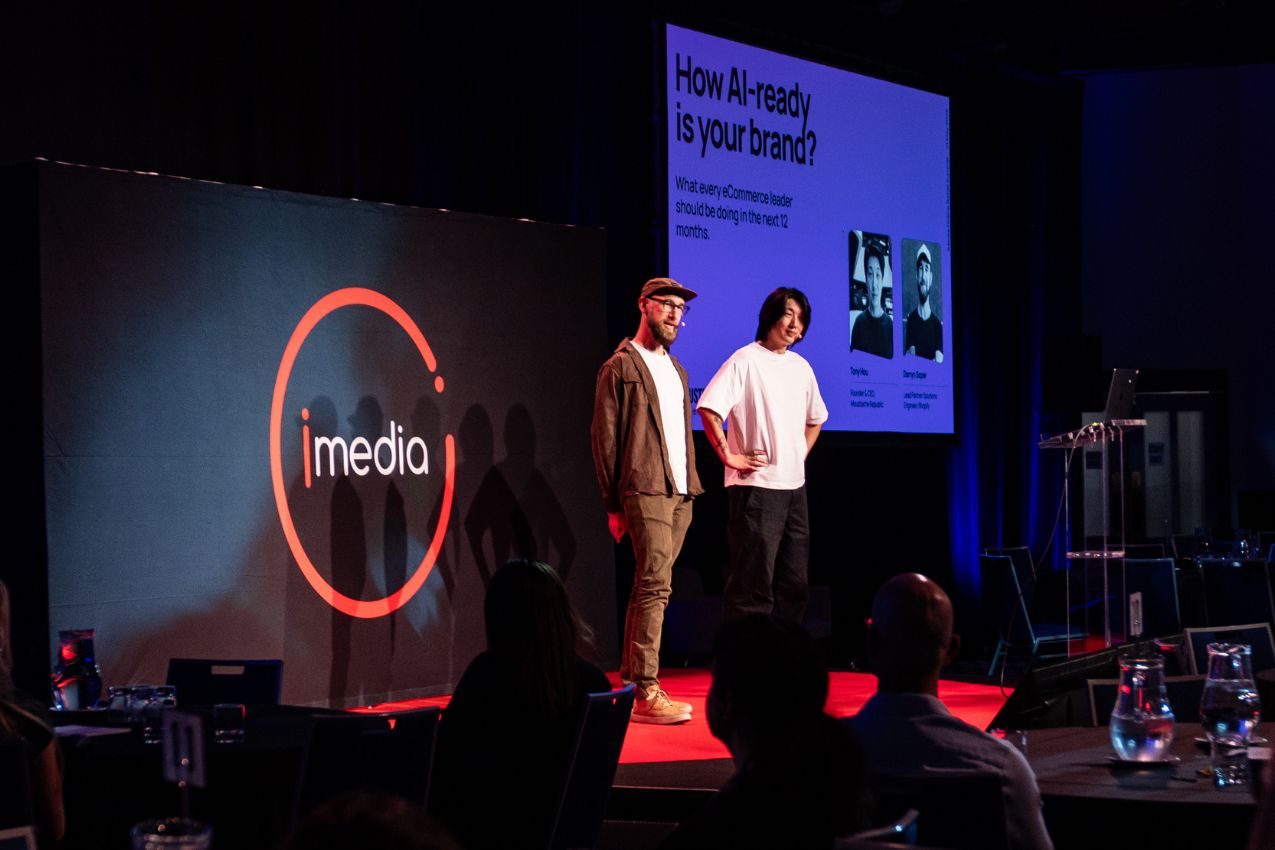
iMedia Breakout Session: How AI-ready is your brand? What every eCommerce leader should be doing in the next 12 months
The starting point of the customer journey has shifted. Two years ago, almost every path to purchase began in Google. Today, more of them start inside ChatGPT, Perplexity, AI Overviews and the agents that browse, compare and buy on a customer's behalf.
That shift forces a question every eCommerce leader is now sitting with: how AI-ready is your brand?
Our Founder and CEO Tony Hou put that question to retailers at the iMedia Online Retail Summit in New Zealand, alongside Darryn Soper, Lead Partner Solutions Engineer at Shopify. Their answer was not a single fix. AI-readiness is three separate disciplines, and most brands are quietly behind on all of them.
The three angles every brand needs to get right
Discoverability is about being found in AI-led search. Value-add is about using AI inside the customer journey to remove friction at the moments that cost you sales. Operational efficiency is about giving your team AI that actually knows your business. The brands that pull ahead in the next twelve months will be working on all three at once.
01. Discoverability - being found in AI-led search
Customers used to start in Google. They are now starting in ChatGPT, Perplexity, AI Overviews and Claude. The implication is straightforward: if those surfaces cannot understand what your brand sells, who it is for, and what makes it different, you do not show up.
Discoverability has always been a content and structured-data problem. The difference now is who you are writing for. Search engines crawled and indexed. Large language models read, summarise and recommend. Your product pages need to be intelligible to both - and the brands winning are the ones who have rewritten product copy, hardened their schema, and tightened brand and entity information so AI models describe them correctly.
Shopify is investing heavily here, building the Universal Commerce Protocol so storefronts can speak directly to AI agents. Merchants who are ready will be cited. Merchants who are not will be skipped - and they will not know why their traffic is quietly draining away.
02. Value-add - AI inside the customer journey
The lazy version of AI on a storefront is a chatbot bolted onto the bottom-right of the page. The version that actually moves the needle is AI used surgically - at the precise moments where customers drop off.
Three examples of what this looks like in practice. A pod recogniser that lets a customer snap a photo of their coffee machine and instantly find compatible products, removing the model-number guesswork that ends in an abandoned cart. A product comparison feature that lets shoppers compare two or three items side by side in natural language, with the AI explaining trade-offs in plain English instead of forcing them into a spec table. AI-generated model imagery that turns a flat product shot into a studio-grade lifestyle image, replacing weeks of photoshoot lead time and giving brands the volume of content modern feeds demand.
These are not novelties. They are friction removals at the moments that determine whether a customer buys.
03. Operational efficiency - AI that actually knows your business
The third pillar is the one most brands rush at fastest and get the least from. Generic AI assistants are useful for generic tasks. They are not useful for running an eCommerce business that has its own products, customers, suppliers, tone of voice and historical decisions.
The unlock is context. The brands getting real leverage from AI internally are the ones connecting their tools - Slack, Drive, Jira, Gmail, meeting recordings - into a single context layer that their AI assistants can draw on. When Claude or ChatGPT knows your brand voice, your pricing rules, your reorder thresholds and your last six months of decisions, the output changes from generic to genuinely useful.
Shopify has shipped its own version of this with Sidekick - a co-pilot inside the admin that can answer questions, surface reports and execute tasks in plain English. The bigger move for merchants is to build their own brand memory and wire it into every AI tool their team touches.
What we are doing at Moustache Republic
We are doing this work with brands right now. Making storefronts discoverable in AI-led search. Building AI features into the customer journey. Wiring brand context into the tools our clients' teams use every day.
We also built a free, one-minute AI Readiness Audit so any brand can see where they sit across all three pillars - and what to fix first. You enter your domain, the audit scores your site, and you walk away with three priorities for the next twelve months.
Take it at audit.moustacherepublic.com.
The next twelve months
The platforms are moving. Shopify is investing across all three pillars. The AI surfaces customers are starting their journeys on are getting more capable every quarter. The window between being early and being late is closing fast.
The next twelve months will sort the brands that adapted from the brands that were busy. We would rather you were the first.