.svg)
Unified Commerce Assembly 2026
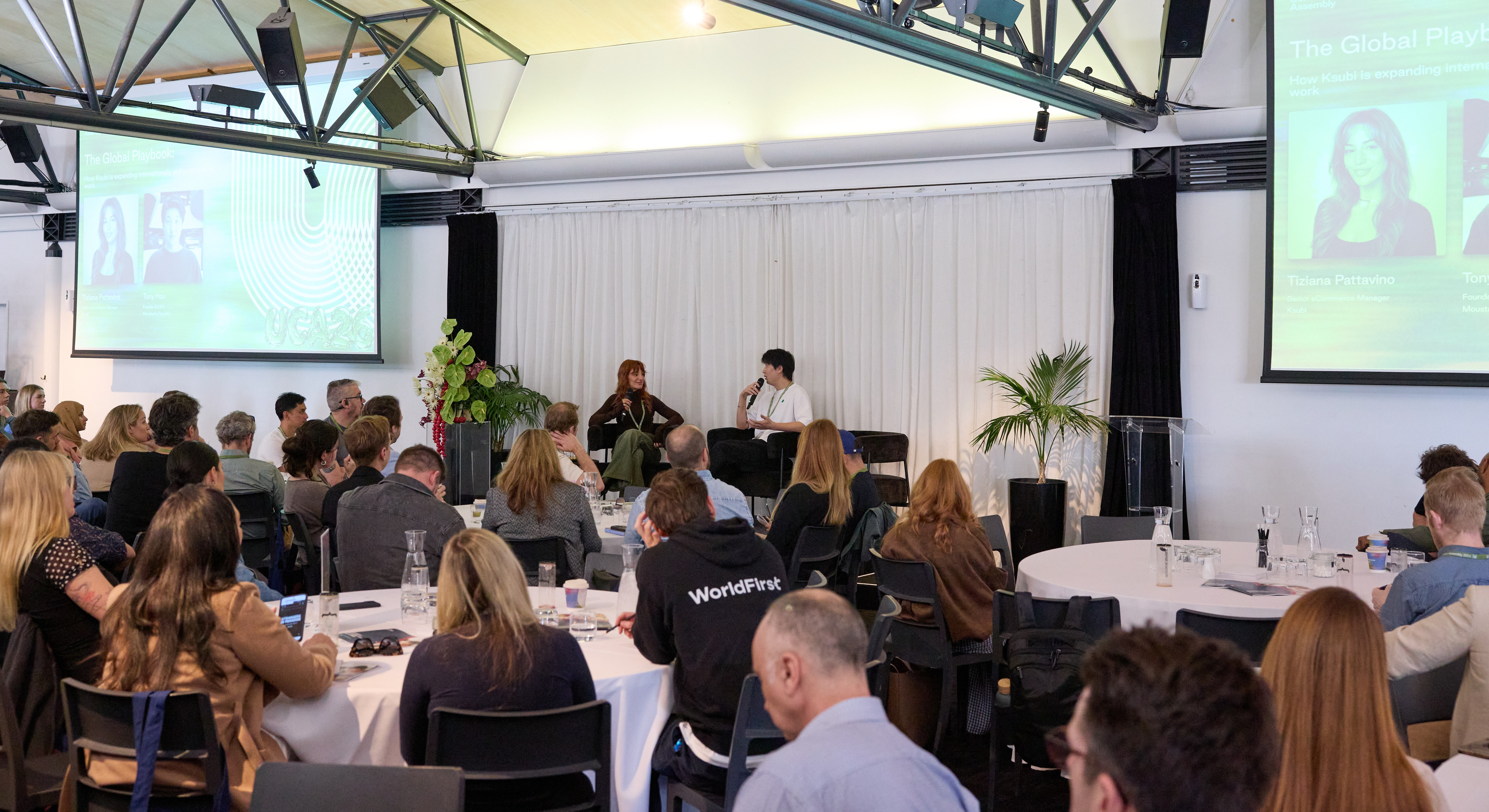
Highlights from the third Unified Commerce Assembly, held at The Maritime Room in Auckland on Thursday 27 August 2026, in partnership with NZ Post.
Three ideas ran through the whole day, and none of them were on the agenda. AI has moved out of pilot and into production, but the room is polarised rather than evenly advanced. Margin pressure is being answered through retention and repeat purchase rather than deeper discounting. And scaling is an operational problem long before it is a demand problem.
The market is growing, and not the way most people assume
Chris Wong, GM Business at NZ Post, opened with card transaction data supplied by Dot Loves Data, alongside the Online Shopper Survey 2026.
Online retail in New Zealand is now growing six times faster than in store. Six billion dollars was spent online in the first half of 2026, up 12 percent year on year against 2 percent in store, with online share of retail up 1.4 percentage points. The important detail is that the growth is transaction volume driven rather than inflation led. People are buying more often, not simply paying more.
Health and beauty was the fastest growing sector at 32 percent, specialty food, groceries and liquor is now the largest online sector at 1.4 billion dollars, and the fastest growing age group is 65 and over. All of it held up against volatile fuel prices and a shift of wallet share towards fuel and utilities.
AI is the new front door
The line the room kept returning to for the rest of the day closed that session: 'If AI can't understand you, shoppers won't find you.'
Shoppers are increasingly starting in an assistant rather than a search engine, and most retailers have never checked what those assistants say about them. NZ Post put four things in front of the room:
- Check how AI sees you by running real prompts and reviewing the answers properly.
- Make your content easy for AI to read: clear titles and descriptions, specs, FAQs and verified reviews.
- Build trust into the content, including your New Zealand location, delivery timeframes and returns.
- Use AI to support customers on the repetitive questions, with an easy switch to a real person.
One practical refinement came out of the round tables. When you run those prompts, do it logged out or in incognito. A signed-in session personalises the answer and will flatter you.
Two Unternational Playbooks
Città and Ksubi took the international sessions from opposite ends of the same problem.
Emmett Vallender, COO at Città, used the commerce re-platform as the operating case. The old setup carried an eight click checkout, a single working payment connection and manual product feeds. The Shopify deployment landed more than a year late, and integration was the material delivery risk rather than anything on the storefront. For the United States, the team revised its initial broad targeting after profiling roughly 230 early customers and finding a younger, creatively employed audience.
Tiziana Pattavino, Senior eCommerce Manager at Ksubi, described the other model: seven separate Shopify instances and six physical locations against one ERP, run by a lean team. Localisation runs in three layers, being shared global catalogue management, content organised for Northern and Southern Hemisphere seasonality, and localised search, merchandising, payments and delivery. Fulfilment routes out of New Jersey, California, Sydney and Hong Kong to avoid split orders.
Her AI examples were narrow and operational, which is why they were useful. Conversion at three times baseline among users of the AI assistant, an AI email agent fully closing roughly 5 to 10 percent of tickets, and about half of the transcripts she reviews concerning size and fit, which is now feeding a proposed fit tool.
Beyond the Discount
Ashleigh Levett of Klaviyo convened Lachi Agnew of JULY and Jacob Coulton of BePure on looking past discounting as the default acquisition tactic. The argument was not that promotions are wrong, but that they have to be assessed inside a wider commercial strategy: what role price incentives actually play, the quality of customer they attract, and whether the first purchase leads anywhere. The NZ Post data backed the same point from the fulfilment side, where value takes in quality that lasts, loyalty rewards and clear visibility of dispatch and delivery. Shoppers were reported as twice as likely to repurchase after a good delivery experience.
The Keynote: Grow a a Pace the Business Can Absorb
Wayne Kennerley of Kennerley Gourmet Grocery closed the stage programme with the Paddock to Pantry story, a family business going after the supermarket duopoly. In the latest tracked period it sits at 77 percent search visibility, ahead of all three major supermarket websites.
The chart was not the interesting part. The opportunity he framed was 1 percent of the market, worth 260 million dollars of annual revenue equivalent, and the route there was five unglamorous choices: partner with specialists, fail fast on marketing, keep inventory tight, grow within the cash flow the business actually has, and invest in the right people. His framing was that the operating constraint is the strategy. The next mission is another 3x, and the challenge is operational rather than commercial. His closing slide: making progress every day, there is no silver bullet.
Round Tables
Eight tables hosted by Moustache Republic, Shopify, Klaviyo, Athos Commerce, Clearer.io, Gorgias, Starshipit and WorldFirst. Three things came back.
One. AI is in production, and the room is split in two. One table found small and mid sized retailers with live operational use cases, including custom loyalty apps built in house and AI used to diagnose a revenue drop rather than report it. The surprise was maturity rather than ambition. Another found about a third of its table had deliberately started on AI discoverability, while two thirds had not started and some were hearing the term for the first time. There was very little middle.
Two. Product data is the constraint on discovery, not media spend. Two tables reached that independently. Discovery is moving offsite to shopping surfaces, marketplaces, advertising and AI assistants, which makes the catalogue the thing that decides whether a brand appears at all. As the Shopify table put it: "People think it's about ranking in a list. It's not. It's about being the right answer for the right person."
Three. The blockers named were internal, not technological. Marketing and service running off two different views of the customer. Executive buy-in rather than capability at the larger end of the room. Margin leakage across FX and transaction fees that nobody was measuring. And some retailers still running fulfilment on spreadsheets and paper based picking.
The bright note was trading sentiment. The expectation going in was gloom about the economy. Instead a lot of retailers said sales were up.
Where to start
The most repeated request of the day was to be told the three things to focus on. Each of these produces a number you do not currently have.
- Ask ChatGPT, Claude and Perplexity ten real buying questions from your category, logged out. Record whether you appear and where the answer came from.
- Check your Shopify Catalog status, and segment sessions and orders from assistant referrers in your analytics.
- Sample 200 products and compare title, description, imagery and attributes. The output is a defect rate, and that number justifies everything downstream.
Thank you to NZ Post, our event partner since the first year, to Shopify, Klaviyo, Athos Commerce, Clearer.io, Gorgias, Starshipit and WorldFirst for hosting round tables.
Unified Commerce Assembly returns in August 2027.